From the living cookbook
Lemon & thyme roast chicken
The Sunday bird. Salted early, roasted hot, rested long enough that the table can gather itself.
- Serves
- 4
- Time
- About 2 hours, mostly unattended
- Active
- 20 minutes
- Roast
- About 1 hour 10 minutes
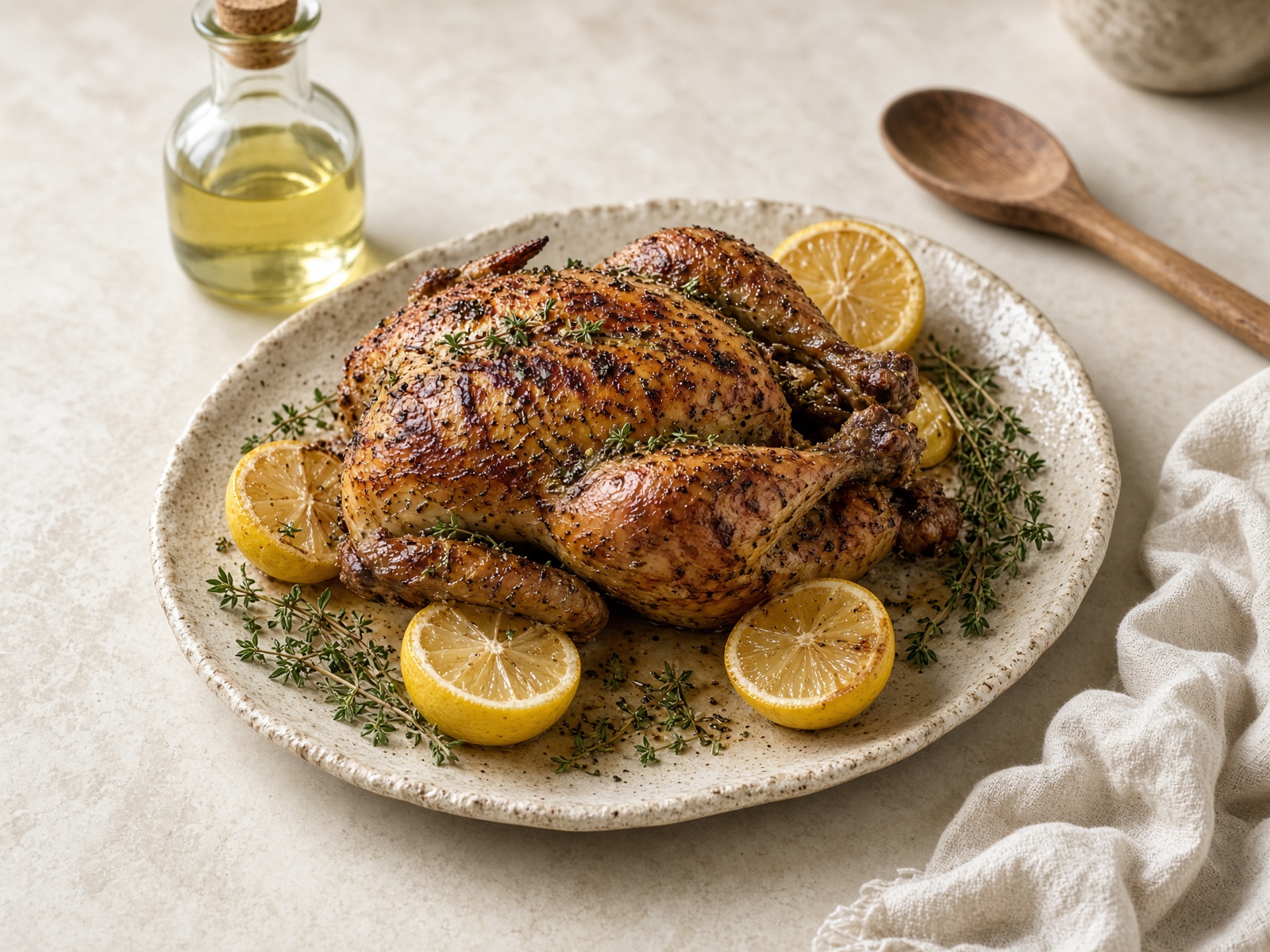
This is the bird we make when the week has been long and someone is coming — or when no one is, and the house still deserves a roast. It is not a project. It is salt, heat, and the patience to leave it alone.
Salt it the night before if you can. Uncovered in the refrigerator, the skin dries and the meat seasons all the way through. That is most of the work, and it happens while you sleep.
Lemon and thyme go in the cavity, not in a marinade. They perfume the drippings. The rest is a hot oven and fifteen minutes of rest, so the juices stay in the bird and not on the board.
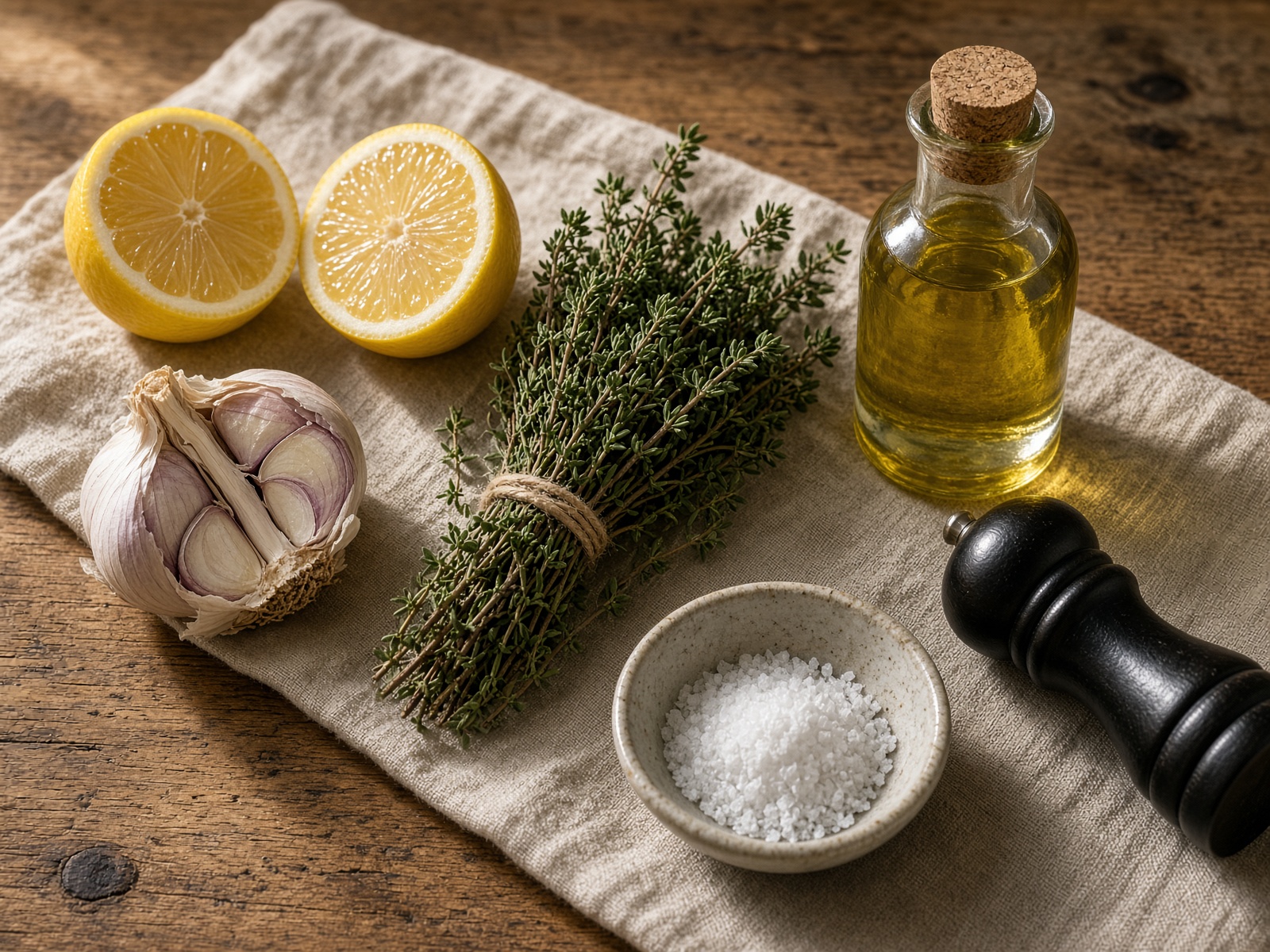
What you need
- A roasting pan or a 12-inch cast-iron skillet
- Kitchen twine, optional
- A sharp knife and a board for carving
- A thermometer, if you like certainty
Ingredients
The bird
The cavity and the pan
To finish
Method
- 01
Salt early
The morning of, or the night before: pat the chicken dry with paper towels. Salt it generously, inside and out — more than feels polite, especially on the breasts and the thickest part of the thighs. Leave it uncovered on a plate in the refrigerator if you can. This is the one thing that makes a weeknight bird taste like a Sunday.
- 02
Heat the oven
Heat the oven to 425°F, with a rack in the middle. Take the chicken out while the oven warms so the chill comes off. Set a roasting pan or a wide cast-iron on the counter. If you are using the onion, scatter the wedges in the pan — they will sweeten the drippings.
- 03
Dress the bird
Set the chicken in the pan, breast up. Rub the skin with olive oil. Stuff the cavity with the lemon halves, the garlic, and most of the thyme. Tie the legs if you like a neater shape; it is not required. Pepper the skin. Tuck a couple of thyme sprigs around the bird.
- 04
Roast until gold
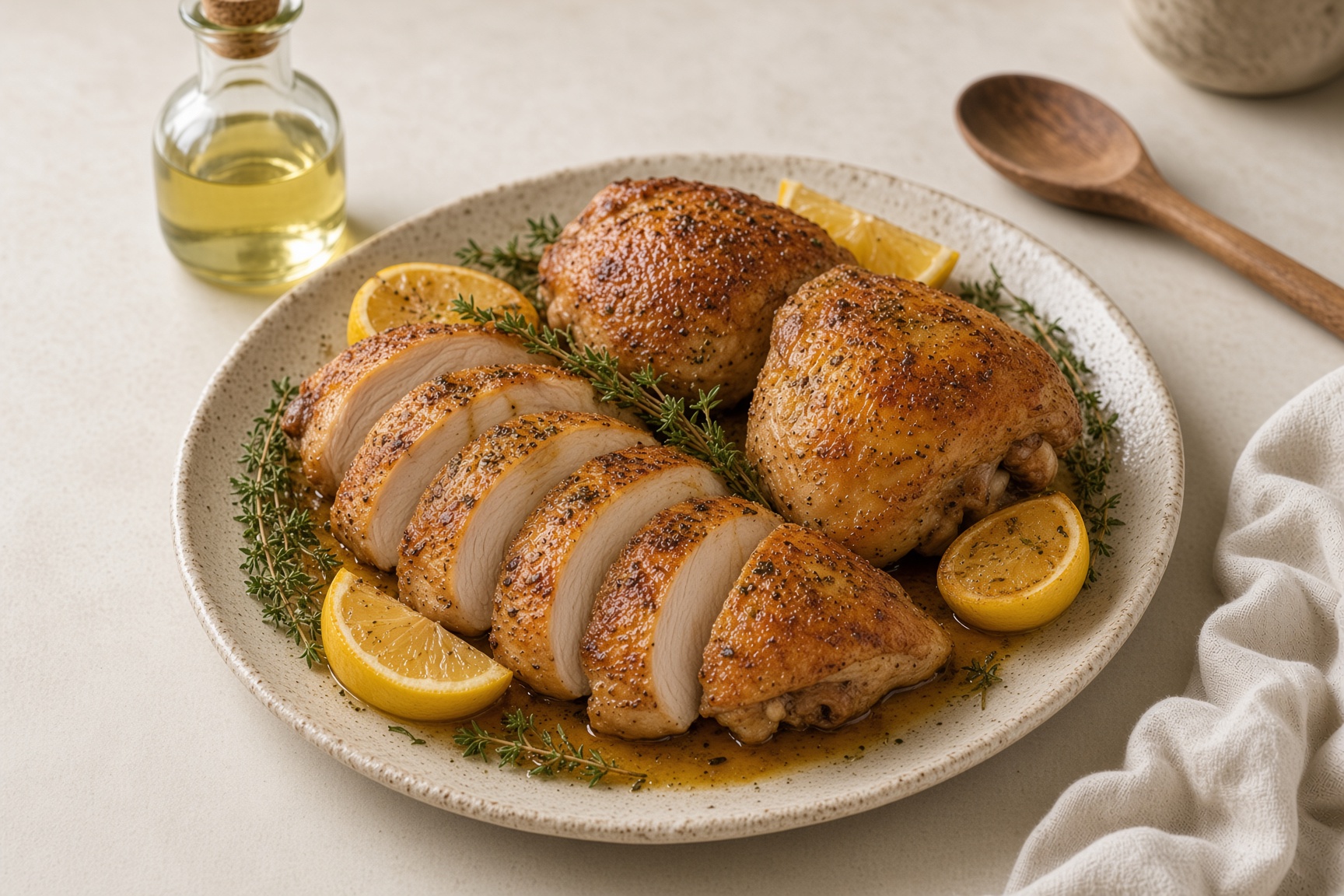
Roast about 1 hour 10 minutes. It is done when the juices run clear at the thigh, the legs move freely, and the skin is deep gold. A thermometer at the thickest thigh should read 165°F. If the pan looks dry, a splash of water at the edges will save the drippings from burning.
- 05
Rest, then carve
Rest 15 minutes, uncovered. The juices settle; the skin stays crisp. Carve at the table if you can: breasts off the bone, thighs and legs, the oysters if you know where they live. Spoon the pan juices over. Finish with a thread of oil and a pinch of flaky salt.
To serve
Bread for the juices. A bitter green — escarole, or arugula with lemon. Whatever wine is already open. The garlic in the pan is a prize; squeeze it onto the bread.
Make ahead
Salt the night before. Leftovers keep two days, covered, in the refrigerator — the carcass makes a pot of soup, the meat a sandwich with more lemon. Do not reheat the whole bird; slice and warm the pieces in the juices, or eat them cold.
The bird is done when a thigh reads 165°F, but your eye is better: the legs should move freely, the breast still juicy. If you only have dried thyme, use a teaspoon in the cavity and a few lemon peels. Fresh is the point.
Also on the table