From the living cookbook
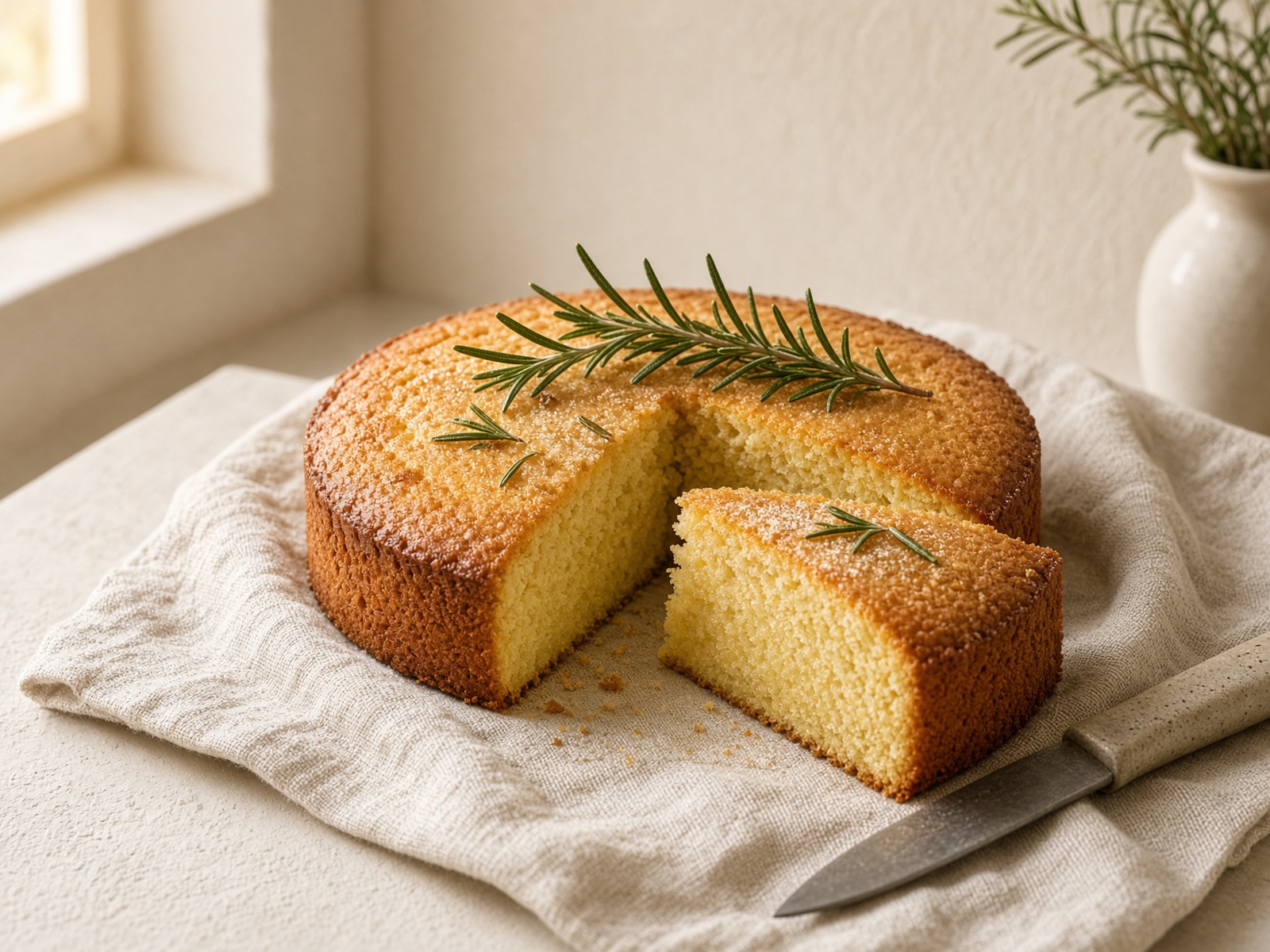
Rosemary olive oil cake
A cake that can sit on the sideboard all afternoon. Olive oil, lemon, a little rosemary — more oil than butter, on purpose.
- Serves
- 8 to 10
- Time
- About 1½ hours, including cooling
- Active
- 20 minutes
- Bake
- 35–40 minutes
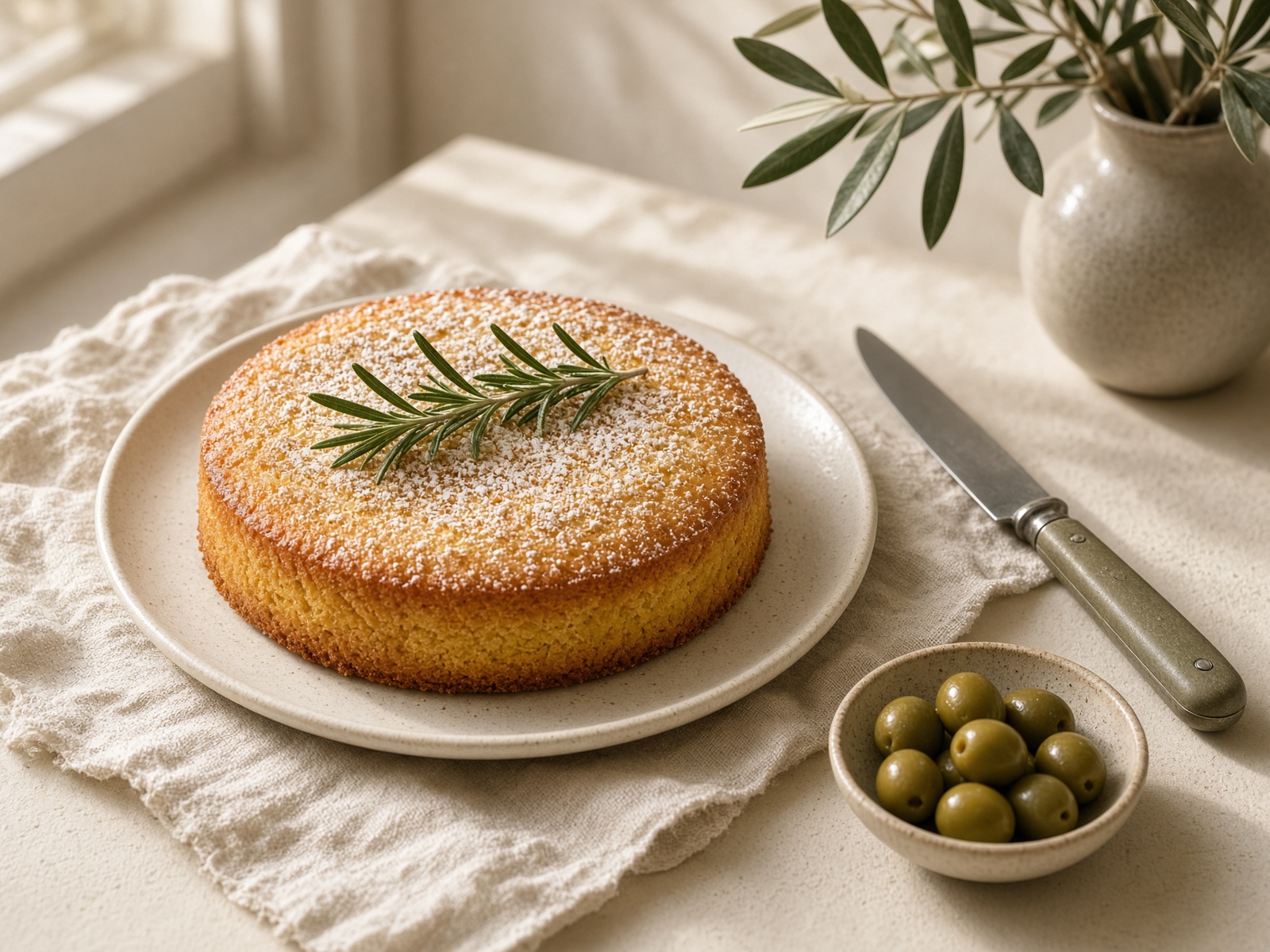
This is the cake we make when someone is coming, and also when no one is. It does not need frosting. It does not need a celebration. It needs a tin, a whisk, and an hour you were going to spend in the kitchen anyway.
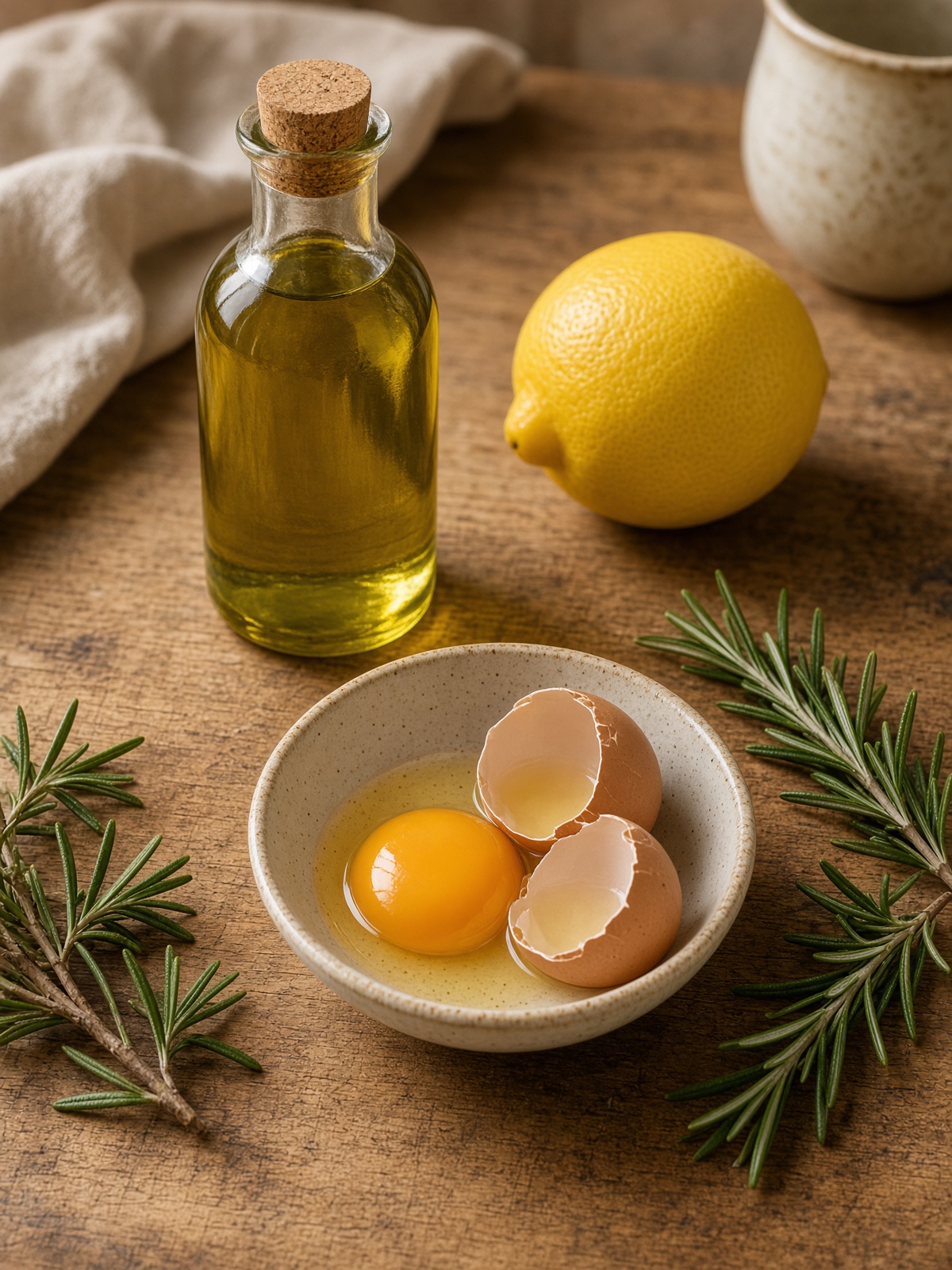
Olive oil is the fat, on purpose — a mild extra virgin you would eat with bread, not the peppery finishing oil that would make the crumb taste bitter. Rosemary is a teaspoon, chopped fine. More than that and it becomes a pine forest. Lemon zest is what keeps it from going savory.
It is better on the second day. That is not a consolation. That is the point.
What you need
- A 9-inch round cake tin (or a 9-inch springform)
- Parchment paper
- Two mixing bowls
- A whisk
- A microplane or fine grater
Ingredients
Dry
Wet
To finish
Method
- 01
Heat the oven, ready the tin
Heat the oven to 350°F, with a rack in the middle. Butter a 9-inch cake tin and line the bottom with a round of parchment. Butter the parchment too. This is the difference between a cake that turns out and a cake you negotiate with.
- 02
Chop the rosemary
Strip the needles from the stem and chop them until they look like coarse tea — not a paste. You want perfume, not twigs. Zest the lemon over a small bowl so none of the oil stays on the board.
- 03
The dry bowl, the wet bowl
In one bowl, whisk the flour, baking powder, salt, and sugar until the salt disappears. In the other, whisk the eggs until they look a shade paler, then stream in the olive oil as you whisk. Add the milk, lemon zest, and rosemary. The mixture should look like a loose custard — glossy, not split. If it looks broken, keep whisking; it usually comes back.
- 04
Fold, do not beat
Pour the wet into the dry. Fold with a spatula until you no longer see dry flour. A few small streaks will bake out. Overmixing makes a tight crumb, and this cake is meant to be tender. Scrape into the tin and tap once on the counter to settle it. If you like a little crackle on top, dust the batter with the extra tablespoon of sugar.
- 05
Bake until it springs
Bake 35–40 minutes. It is done when the center springs back under a fingertip and a tester comes out with a crumb or two clinging — not wet batter, not bone dry. The top should be deep gold, the edges just pulling from the tin. If it domes a little, leave it. That is a cake, not a photograph.
- 06
Cool, then turn out
Cool in the tin 15 minutes. Run a thin knife around the edge, invert onto a rack, peel the parchment, and turn it right-side up. Cool another 20 minutes at least. Lay the rosemary sprig on top and finish with a pinch of flaky salt. Serve slightly warm if you cannot wait, or wait until evening if you can.
To serve
Afternoon, with coffee. Or after supper, with berries that need no cooking, or a spoon of thick yogurt. A further thread of olive oil on the plate is not a mistake.
Make ahead
Better on the second day. Keep it under a cloth at room temperature the first night, then in an airtight tin for up to three days. It does not belong in the refrigerator. Slices freeze well, wrapped, for a month — thaw on the counter, not in a microwave.
If you only have dried rosemary, use a scant ½ teaspoon, crushed between your fingers. Fresh is better. And if the olive oil is all you have, even the peppery kind — use it, and add a teaspoon of honey to the wet bowl to soften the edge.